
Brian, you are right that the seller gets the same money at closing either way. The down payment does not change the price. What it changes is the probability that closing happens at all, and that is the only thing a seller is really buying when they pick between offers. Three specific mechanics. The appraisal cushion, which is the big one. Say the price is 500,000. A buyer putting 5 percent down needs a loan of 475,000, so the appraisal has to support essentially the whole price. If it comes in at 480,000, the deal is in trouble immediately. A buyer putting 30 percent down needs a loan of 350,000. That appraisal could come in at 380,000 and the lender still funds, because the loan-to-value still works. Same house, same day, same appraiser. One deal dies and the other does not notice. Sellers who have been through a low appraisal never forget it. Underwriting risk. A larger down payment usually means lower loan-to-value, which means fewer approval conditions, sometimes no mortgage insurance, and a file that is less sensitive to a last-minute change in the buyer's credit or income. Low-down-payment loans are not bad loans, but they generally sit closer to the edge of every guideline, so there is less room when something unexpected turns up two weeks before closing. Signal about the buyer generally. Someone with 30 percent liquid usually also has reserves left after closing. That matters when the inspection turns up a 6,000 dollar repair. A buyer with money behind them absorbs it. A buyer who scraped together the minimum has to ask you to pay for it, or walks. Now the part that answers your skepticism directly, because you are onto something real. The down payment is a proxy, not a cause. It is a rough signal a seller uses because they cannot see the buyer's actual file. And it is a signal that can be completely wrong. A buyer with 40 percent down and a shaky, unverified pre-approval from a lender nobody can reach is riskier than a buyer with 5 percent down who is fully underwritten with income and assets already documented. I would take the second one every time, and any experienced listing agent would too. Which is why the things that actually reduce a seller's risk are these, and they matter more than the percentage: A fully underwritten pre-approval, not a pre-qualification. Two very different documents. One means an underwriter has reviewed the actual file. The other means someone typed numbers into a calculator. A larger earnest money deposit, which is the buyer's real money at risk. That is the strongest single signal of commitment on the page and it is one nobody above mentioned. A lender who answers the phone and has a track record of closing on time. Shorter contingency periods. And in a tight appraisal situation, a written appraisal gap term, meaning the buyer agrees to cover a shortfall up to a stated dollar amount in cash. So if you are the buyer here and you do not want to put more down, you can compete on those instead. Get fully underwritten, use a lender with a local reputation, tighten your timelines, and put up serious earnest money. That package beats a bigger down payment from a stranger with a weak letter. If you are the seller, do not sort offers by down payment percentage. Have your agent call both lenders and ask what has actually been verified. Five minutes on the phone tells you more than the percentage does. I am a real estate professional, not a lender, so the underwriting specifics on any particular file should come from the loan officer on it. Deerfield is not my market, I am Zoltan Peresztegi, and I work Los Angeles and the South Bay. If you want a North Shore agent who will actually make those lender calls before advising you on which offer to take, I am glad to connect you with someone. Zoltan


Is a bigger down payment better for seller?
Is a bigger down payment better for the seller? If so why? Why would the down payment make any difference as long as they're getting paid?
Expert answers are from licensed real estate professionals with a verified FastExpert profile.
Are you ready to find a top agent near you?
Browse profiles of the highest ranked agents in your area and find one that meets your specific needs.

A bigger down payment does make it highly likely to close, but the ultimate goal for a seller is cash. Keith Jean-Pierre Managing Principal The Dapper Agents Operations In: NY, NJ, FL & CA

A larger down payment can make a buyer’s offer more attractive to a seller, but not because the seller receives more money. The seller is paid the same regardless of the buyer’s down payment. What a larger down payment does is reduce the risk of financing problems. For example, if a buyer is putting 20% down or more, it often means: • The buyer is financially stronger. • The loan is less risky for the lender. • The buyer may have extra funds available if the home does not appraise at the purchase price. If a property appraises lower than the contract price, a buyer with a larger down payment may be able to bring additional cash to closing to cover the appraisal gap. Buyers with very small down payments often cannot do that, which can cause a transaction to fall apart. So while the seller ultimately receives the same price, offers with larger down payments tend to feel more secure and more likely to close. Carol Hunt, Broker, e-PRo, GRI Baird & Warner, Winnetka 847-404-7959 [email protected]
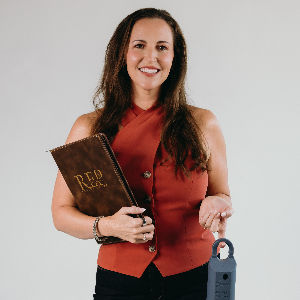
Yes, absolutely. While the seller gets the same amount of money at the end, a bigger down payment proves you are financially strong. A buyer putting 20% down is much less likely to be denied for a loan than a buyer putting 3.5% down. It tells the seller the deal is safer and more likely to close on time.

A large down payment equals "financial stamina." In multi-offer situations, it shows deep commitment and liquidity to bridge appraisal gaps. As your agent, I put your needs first by vetting for creditworthy buyers to ensure a smooth finish. Real estate is about life-critical emotions, not just checkboxes. I’m here to ensure your buyer has the strength to cross the finish line with "no regerts." I don't just find high numbers; I find certainty. Let's protect your equity together.

The larger down payment makes for a stronger buyer. If you are comparing a person that can barley qualify for a loan and someone who has 20% down, the likelihood that you will close is much higher with the person in a better financial situation. Think about if a small live changing event occurred during the buying process. Can the person with only 3% down afford to pay for what just happened and still close with you?
Related Questions
What should I check for liens and title problems before buying my first rental?
Asked by Anonymous | Lakeland, FL | 14 views | Buying | 10-23-2026 | Updated 3 days ago
Should I raise my list price back up after adding the upgrade a buyer asked for, or just eat the cost to get it sold?
Asked by Anonymous | Franklin, TN | 20 views | Buying | 10-23-2026 | Updated 3 days ago
Can I buy tow house
Asked by James Stewart | Los Angeles, CA | 16 views | Buying | 10-22-2026 | Updated 3 days ago
Does a verbal agreement with a buyer actually mean anything once it's time to sign?
Asked by Anonymous | Providence, RI | 20 views | Buying | 10-22-2026 | Updated 4 days ago
Will a lender even approve us for a 15 year mortgage at our age?
Asked by Anonymous | Peoria, IL | 22 views | Buying | 10-22-2026 | Updated 4 days ago
Related Blogs

The Complete Homebuyer’s Due Diligence Checklist Before Making an Offer
It's easy to get excited about buying a home, but it's essential for homebuyers to complete a due diligence checklist to avoid mistakes.

How to Build Home Equity Faster: Strategies That Actually Work
Learn how to build home equity faster with practical strategies for paying down your mortgage, making smart improvements, removing PMI, and… read more

Repairs That Turn Away Buyers During Home Showings
Some home repairs turn away buyers instead of attracting them! Don't lose a buyer with a bad repair, read this guide!