


Service Areas
About Penn Henderson
I have lived on the Big Island since 2001. I started selling real estate here in 2021, after about twenty years in executive sales and marketing and a finance degree from CU Boulder.
That order matters more than it sounds. Twenty-five years of living here taught me which neighborhoods catch the vog, what a lava hazard zone does to an insurance premium, why catchment water changes what a house is worth, and which stretch of coastline is genuinely quiet in February. None of that is on a listing sheet.
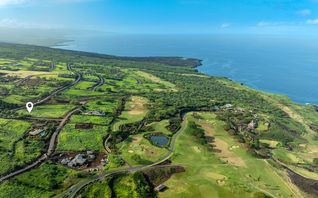
Most of my clients are buying or selling from the mainland, frequently working through a purchase they have only seen on video. I cover West Hawaii: Kailua-Kona, Holualoa and Keauhou, up through Waikoloa, Waimea and the Kohala Coast resorts, and inside the private club communities at Hualalai, Kukio, Kohanaiki, Hokulia, Mauna Lani and Mauna Kea. Second homes, vacation rental investments, and relocations for people who have decided that visiting is no longer enough.
Before you write an offer, I confirm the things that decide what a property actually costs to own here. Lava hazard zone and what it does to insurance and lending. Fee simple or leasehold. Catchment or county water. Road access and who maintains it. Association assessments in the pipeline. Whether a vacation rental permit transfers to you.
When I list a home, I build the price case from comparable sales and their listing history, including properties that expired without selling, and I show my reasoning instead of handing you a number. You get feedback within 24 hours of every showing. My listing agreement does not lock you in.
I will also tell you when the answer is no. If what you are describing does not exist here at the price you have in mind, or if this is the wrong moment to sell, you will hear it from me early rather than after three months on the market.
Hawaii Information Service MLS data ranks me in the top 3 percent of Big Island agents. I hold the Certified Luxury Home Marketing Specialist Guild Elite designation, along with PSA, e-PRO, RSPS, and At Home With Diversity, and I am a REALM affiliate. I practice under Compass.
Outside of work, I am in the water most mornings, part of the local triathlon and running community, and president of City SC Hawaii, a youth soccer club here.
OTHER LANGUAGES
Community Involvement
HOBBIES/INTEREST
FAMILY
Credentials
LICENSE
Designation
REALM® Luxury Certified
At Home with Diversity
PSA (Pricing Strategy Advisor)
CLHMS (Certified Luxury Home Marketing Specialist)
Top Producer
Licensed Realtor
ePro
REALTOR
Specialties
- Buyer's Agent
- First Time Home Buyers
- Foreclosure specialist
- Investment Properties
- Land & Lots
- Listing Agent
- Luxury Specialist
- New Construction
- Relocation
Awards

2026
TOP AGENT
Kailua Kona, HI
2026
TOP AGENT
Kamuela, HI
2026
TOP AGENT
Waikoloa, HI
Other Awards
2022 West Hawaii REALTOR(R) Rising Star Award - 2023 NextHome President's Circle Award - 2024 NextHome President's Circle Award
FAQ
Answered Questions
Great question, Eric - and one I can actually answer with current data even though it's Oahu, not my market. Mililani is a well-established, family-friendly planned community in central Oahu, and it's consistently among the more affordable single-family home markets on the island, relative to Oahu standards. Here's where the numbers sit right now: The Mililani single-family home median price is approximately $1,100,000, up about 3% from the prior year. It's a competitive market too, with about one in three homes selling above asking price, and inventory is extremely tight at around 1.0 months of remaining supply. For context on recent sales, homes have been closing anywhere from the mid-$800s up to $1.3M, depending on size and condition, so there's a real range depending on what you're looking for. Bottom line: Mililani offers solid value by Oahu standards, with good schools, great community amenities, and a central location. Buyers should be prepared to move quickly and potentially compete. I'd recommend connecting with an Oahu-based Realtor who specializes in that market for the most up-to-date inventory and neighborhood-level guidance. And if you ever have questions about the Big Island market, I'm always happy to help, or get you a property valuation here: pennhenderson.com/evaluation Mahalo, Penn
Great question, Donna, and one that comes up more than you might think. Here's the general real estate side of it aEUR" though I'd strongly recommend looping in a HUD-approved housing counselor and/or a real estate attorney for the financial and legal specifics, as that's outside my lane as a realtor. The basics: A home with a reverse mortgage can absolutely be sold. The sale proceeds are used to pay off the reverse mortgage balance first, and anything left over goes to the homeowner (or the estate, if the homeowner has passed). Key things to know going in: Get a payoff statement first. Contact the reverse mortgage servicer to find out the exact payoff amount. This determines whether there's equity left after the sale. If the home is worth less than the loan balance, a reverse mortgage is a non-recourse loan, meaning the lender can only collect up to the home's value. You wouldn't owe the difference out of pocket. Timeline matters. Reverse mortgages typically give heirs or borrowers a set window (often 6 to 12 months) to sell or settle after a triggering event like the borrower's passing or moving out permanently. The sale process itself is pretty standard once the payoff is confirmed. It lists, markets, and closes like any other home sale. My recommendation: Start by calling your reverse mortgage servicer, then connect with a HUD-approved counselor (free service) and a local real estate attorney. Once those pieces are in place, a realtor can take it from there. Happy to help on the real estate side when you're ready, Donna! Mahalo, Penn Henderson R(S) Big Island Hawaii Real Estate
Great question, Billy, and an honest one worth answering straight. The short answer: you don't always need one, but here's why most people are glad they have one. Pricing it right: This is where most FSBOs (for sale by owner) leave money on the table. A good agent knows the local market inside and out and will price your home to attract the right buyers, not just the first ones. Overpricing sits. Underpricing costs you. Exposure: Agents list on the MLS, which feeds Zillow, Realtor.com, and every buyer's agent in the area. More eyes on your home means more competition, and more competition typically means a better price. Negotiation: It's not just about the offer price. Inspection repairs, closing costs, contingencies, timelines aEUR" every piece of the contract is a negotiation. Having someone in your corner who does this daily makes a real difference. Transaction management: There are a lot of moving parts between offer and closing: escrow, title, lenders, inspectors, appraisers, county requirements. An agent keeps everything on track so deals don't fall apart over something preventable. Legal protection: Real estate contracts are complex. An agent knows the disclosures required by law, the clauses that protect you, and the red flags to watch for. The cost question: Commissions are always negotiable, and with recent industry changes buyers and sellers have more flexibility than ever. In most cases, a well-priced, well-marketed home more than offsets the commission in net proceeds. Bottom line, Billy: a great agent pays for themselves. If you're thinking about buying or selling on the Big Island, I'd love to connect. Check out what I do at pennhenderson.com and let's talk!
Great question, Aaron, and honestly, it speaks well of you that you're thinking about it this way. The straightforward answer: no, it's not offensive to ask. Any experienced agent has had the conversation before and won't flinch at a respectful discussion about compensation. What matters is how you approach it. That said, here's my honest take as someone who's been doing this a long time on the Big Island: Commission reflects service level. Selling real estate, especially in a market like Hawaii, isn't a part-time task. I'm talking professional photography, targeted marketing, MLS exposure, open houses, negotiations, transaction coordination, out-of-pocket expenses, and often months of work before a single dollar comes in. A reduced commission can sometimes mean reduced effort, and in a luxury or complex transaction, that's a real risk. You get what you pay for. The few percentage points you might save on commission can easily be lost in a lower sale price, a deal that falls apart, or a costly mistake in the contract. A skilled agent more than earns their fee in net proceeds and peace of mind. My approach: I charge a minimum of 2.5 to 3% depending on the property. I don't cut corners, I don't outsource your listing, and I bring my full effort to every transaction. I'm upfront about that from day one. So by all means, have the conversation. Just know that the best agents know their worth, and the right agent for you is one whose value is easy to see. For reference, here's my approach to buying and selling (in Hawaii): https://pennhenderson.com/buying https://pennhenderson.com/selling Mahalo, Penn
Great question, Sally, and the short answer is: usually not. Here's the reality of what often gets cut when an agent drops to 1%: Marketing: Professional photography, videography, 3D tours, targeted digital advertising, print materials aEUR" these cost real money. At 1%, something has to give, and marketing is usually the first to go. Your listing deserves to look its best, especially in a competitive market. Time and attention: Discount brokerages often run high volumes to make the math work. That can mean less responsiveness, less negotiation muscle, and less hand-holding through what is likely one of the biggest financial transactions of your life. Buyer agent cooperation: If the total commission is only 1%, there may be little to nothing offered to the buyer's agent. That can quietly discourage agents from showing your home, which shrinks your buyer pool. Experience and expertise: Top-producing agents don't work for 1%. The agents willing to do so are often newer, less experienced, or operating inside a high-volume discount model where your listing is one of dozens. The bottom line, Sally: A skilled agent typically nets you more money even after a full commission, because of stronger pricing strategy, better marketing, and sharper negotiation. The cheapest option rarely delivers the best outcome. I'm not licensed in your area, but If you're thinking about buying or selling on the Big Island, I'd love to show you what full-service representation actually looks like: https://pennhenderson.com/buying https://pennhenderson.com/selling Mahalo, Penn


Contact Information
Location
Social Media


Available Listings View All


 View All Listings
Trusted Professionals

Trusted Pro
Penn Henderson is a Trusted Pro with a network of verified professionals.

Real Estate Agent
 ZillowVERIFIED