



Service Areas
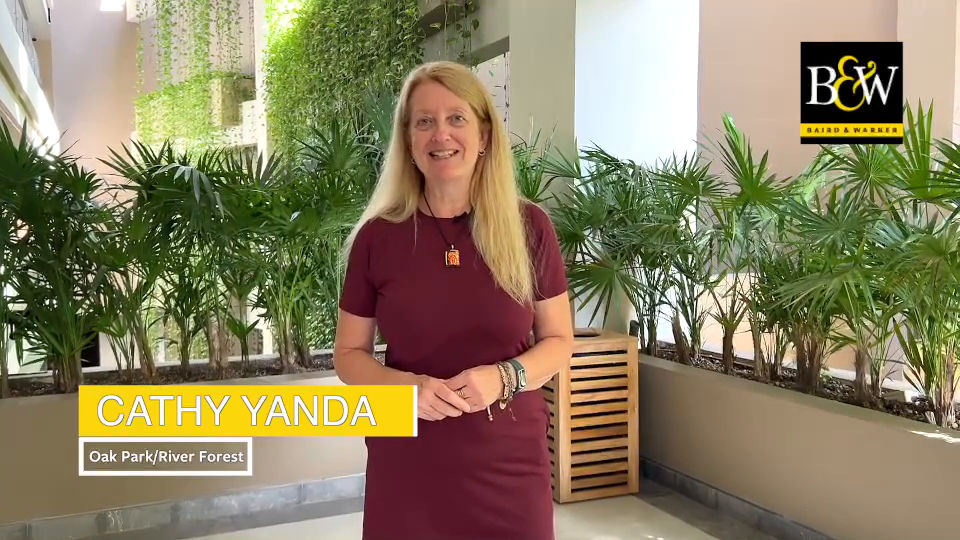
About Cathy Yanda
Community Involvement
HOBBIES/INTEREST
Credentials
LICENSE
Designation
ePro
Real Estate Investing
Seller Representative Specialist
Licensed Realtor
Broker / Associate Broker
Military Relocation Professional
REALTOR
ABR (Accredited Buyers Representative)
SFR (Short Sales & Foreclosure Resource)
Specialties
- Buyers
- Sellers
- Rentals
- Residential Property
Awards

2026
TOP AGENT
Oak Park, IL
2026
TOP AGENT
Franklin Park, IL
2026
TOP AGENT
River Forest, IL
Other Awards
Real Trends Verified top 1.5% National
Answered Questions
Those "We Buy Houses" postcards and flyers are a common sight in Chicago and Oak Park, and the short answer is: They are usually legitimate businesses, but they are rarely "market value" deals.Most of these mailers come from real estate investors or wholesalers. While they aren't necessarily "scams" in the sense of stealing your identity, they operate on a business model that prioritizes speed and convenience over price.Here is the breakdown of what is actually happening when you call that number.1. The "Wholesaler" vs. The "Cash Buyer"It is vital to know who is on the other end of the phone.Actual Cash Buyers: These are often "fix-and-flip" investors. They have the funds in the bank, they buy the home themselves, and they take on the risk of the renovation.Wholesalers: These are middlemen. They get you to sign a contract to sell your house, but they have no intention of buying it. Instead, they "assign" that contract to a real investor for a fee (often $5,000"$20,000).The Risk: If a wholesaler can't find a buyer during their "inspection period," they will often use a loop-hole contingency to back out of the deal at the last minute, leaving you back at square one.2. How They Calculate Your "Lowball"Most investors use the 70% Rule. They aren't trying to rip you off; they are accounting for the high costs of renovation, holding, and resale in the Chicago market.The Math: (After Repair Value x 70%) - Repair Costs = Your OfferIf your home could be worth $400,000 fully renovated...But it needs $60,000 in work...An investor will likely offer you around $220,000.3. Red Flags to Watch ForIf you do need to sell fast, guard yourself against the "bad apples" by watching for these signs:Upfront Fees: A legitimate buyer will never ask you for money to "evaluate" the home.No Proof of Funds: If they can't show a recent bank statement or a letter from a reputable local lender, they don't have the cash."Handwritten" Notes: Many of those "handwritten" yellow letters are actually mass-printed in factories. It's a marketing tactic to make them seem like a "local neighbor," when they may be a national corporate entity.Long Inspection Periods: If they ask for 21"30 days of "inspection," they are likely a wholesaler trying to find a real buyer for your contract.4. Is it Ever a Good Deal?It can be a "good deal" if the value of your time and peace of mind outweighs the equity you're leaving on the table. It's often used by people who:Inherited a "hoarder" house or a property in major disrepair.Are facing immediate foreclosure.Need to move within 10 days and don't want strangers walking through for showings.
This is a common question, and you've correctly identified a key real estate market trend. Here's a detailed breakdown of how living near high-voltage power lines affects properties in the Chicago area and beyond, specifically written for your FastExpert profile. Expert Answer: Living Near Power LinesaEUR"Perception vs. Reality This is one of those classic real estate questions where public perception has as much (or more) impact on value than scientific consensus. The short answer is: While health risks remain debated, living near power lines is definitively "bad" for a home's resale value and ease of sale. Here is the breakdown of the three key areas you asked about: Health, Price, and Resale. 1. Are Houses Near Power Lines Cheaper? (Yes.) You are correct; houses near high-voltage lines almost always carry a lower price tag than comparable homes just a few blocks away. This is a direct result of market demand. Because a significant percentage of buyers refuse to even consider a home near power lines, the buyer pool is severely limited. To attract a buyer from that smaller pool, the price must be lower to compensate for the perceived disadvantage. How much cheaper? There is no single percentage, but studies and market data generally suggest a reduction in value ranging from 5% to 15%, sometimes more if the lines are extremely dominant or noisy. The visual impact (the "eyesore" factor) is a major driver of this discount. 2. The Big Concern: The Health Debate This is the primary driver of public perception. High-voltage power lines produce Extremely Low Frequency (ELF) Electric and Magnetic Fields (EMFs). ** The Public Fear:** Many people worry about a link between proximity to power lines and long-term health issues, particularly childhood leukemia. The Scientific Consensus: Organizations like the World Health Organization (WHO), the CDC, and the National Institute of Environmental Health Sciences have spent decades studying this. The generalized consensus is that there is "limited evidence" or that the evidence is "not strong enough" to conclusively prove that typical residential EMF exposure causes cancer. Magnetic field strength drops off rapidly with distance; by the time you are 100"300 feet away, the strength is often no higher than background levels found inside a typical home (near appliances like microwaves, blenders, or alarm clocks). The Bottom Line on Health: Science doesn't support the level of alarm that many people feel. However, when it comes to selling real estate, perceived risk is just as damaging to value as actual risk. A buyer who is worried about their children's health will not buy the house, regardless of what scientific studies say. 3. Is It Harder to Sell a House Near Power Lines? (Yes.) This is the resale reality you need to be aware of. While everything will sell eventually if the price is right, selling a home near power lines is more challenging for several reasons: Limited Buyer Pool: As mentioned, many buyers (particularly families with young children) will filter these homes out of their search entirely. Longer Time on Market (DOM): Because your pool of potential buyers is smaller, it often takes much longer to find the "right" buyer who is comfortable with the location, usually one prioritizing the price discount or other positive features of the home. The Noise Factor: High-voltage lines aren't just a visual nuisance; in humid conditions or after rain, they can emit a distinct humming, buzzing, or crackling noise known as "corona discharge." This can be a major detractor for potential buyers visiting the property. Difficulty with FHA/VA Appraisals: While not an outright rejection, some government-backed loans have specific guidelines for how close a power line structure can be to the property. If the appraiser feels it is too close (particularly if it is within the "fall zone" of a tower), it can create financing hurdles. Summary for FastExpert Clients If you are a Buyer looking to stay in a top-tier Chicago suburb (like Oak Park) but are on a tight budget, a home near power lines can be a valid way to afford that location. Just know you must get a significant discount and be prepared for a slower, more discounted sale when you move out. If you are a Seller with a home near power lines, success comes from proper pricing strategy and extreme transparency. A knowledgeable local agent won't pretend the lines aren't there; they will focus on marketing the home's other key attributes (upgrades, school district, lot size) to find the specific buyer who sees the overall value proposition. Cathy's Quick-Tip: I specialize in navigating complex property sales in the Chicago market. If you need a specific analysis on a property near power lines, just ask!
While general advice is helpful, having concrete data to do your own research is crucial. Here are the primary websites and resources I always recommend to new residents for researching both safety and affordability in Chicago. 1. For Researching Safety and Crime Data These resources provide raw data and official reports, which are far more reliable than generalized neighborhood ratings or social media chatter. City of Chicago Data Portal (Crime - 2001 to Present) The Website: data.cityofchicago.org How to Use It: This is the ultimate official source. It lists every reported crime incident that occurred in Chicago. You can filter the data by type (e.g., "Theft," "Burglary," "Assault"), date, and most importantly, location. You can literally input an address and see all reported incidents within a one-block radius over the last year. This gives you factual, localized information rather than a general neighborhood average. The Marshall Project (Tracking Chicago Crime) The Website: themarshallproject.org (Search: "Tracking Chicago Crime") How to Use It: While not a direct map, this non-profit journalism organization frequently updates high-quality, data-driven visualizations of Chicago's crime trends. They offer critical context on why numbers look the way they do, helping you understand the distinction between property crime (which happens everywhere) and violent crime trends. 2. For Researching Affordability and Rent Trends When prioritizing budget, you need to understand the realistic price range for specific areas to avoid scams or overpaying. RentCafe or Zumper The Websites: rentcafe.com or zumper.com How to Use Them: These are excellent for macro-level research. They provide detailed reports on "Average Rent in Chicago" and, more importantly, "Average Rent by Neighborhood." Before you even look at specific listings, use these sites to see the benchmark price for an apartment (e.g., "An average one-bedroom in Logan Square is $1,800," vs. "An average one-bedroom in Edgewater is $1,400"). This helps you set a realistic budget and know immediately if a listing seems too good to be true (a common red flag for scams). HotPads / Apartments.com The Websites: hotpads.com or apartments.com How to Use Them: These are the primary sites for micro-level searching (i.e., finding specific, available apartments). They have excellent filtering options (e.g., "Must be under $1,600," "Must have in-unit laundry," "Must be cat-friendly"). They provide map views, making it easy to see exactly how close a building is to the 'L' train or essential amenities. Chicago Housing Authority (CHA) / Affordable Housing Opportunity The Website: thecha.org How to Use It: If your college loans make your budget extremely tight, it's worth researching the Affordable Requirements Ordinance (ARO) properties in Chicago. While most CHA programs are income-restricted, some new developments include ARO units which provide subsidized rent for moderate-income earners (including many young professionals). The CHA website and city portals can point you to developers that participate in these programs. My Pro-Tip on Researching Any Site: While these websites provide essential data, they are just tools. The best resource is walking the block. Before signing a lease, visit the specific building at different times (e.g., Tuesday night, Saturday morning). How is the lighting? Who is out? How does it feel? Ready to narrow your search? Connect with an expert who knows the current market and can help you find that perfect balance of price, lifestyle, and comfort in Chicago.
When selling a property with multiple outbuildings, it's not as simple as adding the cost of construction to your asking price. OutbuildingsaEUR"whether they are detached garages, workshops, barns, she-sheds, or studiosaEUR"are valued based on a combination of their permanence, utility, and market demand. Here is a breakdown of how outbuildings are accounted for when selling a house, specifically designed to address how well-maintained structures differ from those falling apart. 1. The Real Estate Classification: Asset vs. Personal Property The first step is determining how the law and appraisers classify the structure. This is the foundation of value. Real Property (Asset): To be considered "real property" that adds significant appraised value, an outbuilding typically needs to be permanently affixed to the land. This means it should sit on a concrete foundation, have footings, or be structurally integrated into the ground. When it's real property, it's included in the overall "improvement value" of the estate, similar to an addition to the main house. Personal Property (Liability or Neutral): If an outbuilding is not permanentaEUR"think of a pre-fabricated plastic shed sitting on skids, or a metal carport that could be disassembled in an afternoonaEUR"it is often classified as personal property. In many cases, these do not add to the appraised value. They are treated more like a piece of furniture or a lawnmower; they happen to be there, but they aren't part of the "real estate" being sold. 2. How the Value Is Actually Determined When an appraiser or a real estate agent assesses your property, they use three main approaches to value your outbuildings: The Sales Comparison Approach (Comps): This is the most common method. An agent will look for recent sales of comparable properties in your area that also had similar outbuildings. They will adjust the price based on the difference. For example, if a house down the street sold for $500,000 without a workshop, and your house has a great 30x40 insulated workshop, the agent will adjust your estimated value upward based on what buyers in that market typically pay for that extra utility. The Cost Approach: This is sometimes used for newer or highly specialized structures (like a modern, climate-controlled art studio). The appraiser calculates what it would cost to build that structure new today, and then deducts depreciation based on its age and condition. The Income Approach: This is rarely used for residential properties but can apply if an outbuilding is a legally permitted rental unit (like an Accessory Dwelling Unit or ADU). In this case, the value is based on the potential rental income it generates. 3. The Condition Quotient: Usable vs. Falling Apart This is the core of your question: how do you prove your buildings add value while the neighbor's eyesore does not? Value is entirely dependent on utility and condition. 4. What Features Drive the Most Value? Not all outbuildings are created equal. These features significantly increase the likelihood that your structures will add substantial value: Electricity: Power makes a building functional for more than just storage. Concrete Flooring: A solid slab foundation is a key indicator of permanence and utility. Insulation & Climate Control (HVAC): This transforms a seasonal building into year-round usable space (office, studio, gym). Plumbing: Adding a bathroom or utility sink significantly boosts ADU or high-end workshop potential. Permits and Codes: This is critical. A beautifully built structure without proper permits can become a massive liability during a sale, sometimes requiring the seller to bring it up to code or even demolish it before closing. Summary for Sellers When you are selling, your well-maintained outbuildings should be positioned as major assets. Your agent should not just list them; they should tell a story about their utility. Don't just list "detached garage"; list "3-car, detached garage with 10ft ceilings, fully insulated, and 200-amp service, perfect for a contractor or hobbyist." A knowledgeable local agent will know exactly how to adjust the comps to reflect the premium your functional, permanent, and permitted outbuildings add to your property's bottom line.
This is one of the most common and delicate situations sellers face. You are absolutely right that you must honestly disclose previous issues, but there is an art to how you present that information. The goal is to be fully transparent without causing unnecessary panic that will drive away potential buyers. In real estate, we call this "disclosing to defend." It's about owning the narrative, demonstrating responsibility, and turning a potential red flag into proof that you have been a proactive homeowner. Here is a step-by-step guide on how to put a positive, professional spin on disclosures, using your specific basement water issue as the primary example. The Psychology of Disclosure: Transparency Builds Trust Before you even start writing, understand that buyers appreciate transparency. When they see a detailed, honest disclosure, they actually feel more secure about the property. They believe that if you are willing to tell them about the problems you did fix, you are likely not hiding anything else. Your mindset should be: "This is how I responsibly maintained my home," not "This is how my house is broken." 1. Own the Narrative (The "Before and After") The biggest mistake is leaving room for interpretation. Don't just state the problem; state the problem and the complete solution you implemented. DON'T JUST SAY: "We have had water in the basement." (This is scary and vague). DO SAY: "We previously experienced water intrusion in the southeast corner of the basement during heavy rains. We determined the cause was improper gutter drainage and a minor foundation crack. We have since completely resolved this issue by installing new, oversized 6-inch gutters with 10-foot downspout extensions and professionally injecting the foundation crack with epoxy in 2021. The basement has remained completely dry since." The "Spin": You have turned "broken basement" into "proactive maintenance." You have defined the problem, showed you found the root cause, and detailed the fix. This gives the buyer confidence that the issue is truly a thing of the past. 2. Provide a Paper Trail of Proof A buyer will trust your words, but they will believe your receipts. A positive spin is backed by evidence. If you tell me you fixed the issue, show me the invoice from the reputable company that did the work. When presenting your disclosure, include: Paid Invoices: Show that professional work was done (not just a "friend" with a bucket of cement). Transferable Warranties: If the foundation repair has a 10-year or lifetime warranty that transfers to the next owner, this is a massive selling point. "Professionally repaired by [Company] with a transferable 15-year warranty for the new owner." That turns a liability into a valued asset. Permits: If the work (like major drainage or a full waterproofing system) required city permits and was inspected, including that proof shows you followed all correct, legal channels. 3. Use Strategic, Positive Language The way you phrase your disclosure can dramatically change how it is received. Avoid alarmist words. 4. Group Similar Issues Together If you are disclosing multiple issues (e.g., the roof leaked in 2018 and the basement in 2021), it's often best to group them into a clear, single "Maintenance & Improvement History" addendum. When a buyer sees five separate "PROBLEM FOUND" sections, they start to panic. When they see a single, comprehensive "A Record of Home Care & System Improvements" document that shows you fixed the roof in 2018, upgraded the electrical panel in 2019, and remediated the basement water in 2021, they see a history of a well-loved and maintained home. Summary for FastExpert Sellers: In your specific case with the basement water, your disclosure should look something like this in the "Water Damage" section: YES, previous water intrusion has occurred. "During exceptionally heavy rainfall, minor water accumulation previously occurred in the basement. This issue was completely diagnosed and remediated in [Year]. We discovered the primary cause was insufficient gutter capacity and inadequate grading near the foundation. We have since: 1) Installed new, oversized 6-inch seamless gutters and added 10-foot downspout extensions to direct water away from the foundation. 2) Re-graded the landscape beds on the south side of the home to a positive 5% slope. The basement has remained completely dry for the past 3 years. Paid invoices from [Gutter Company] and [Grading Company] are attached. We have been proactive and have complete confidence the issue is resolved." This is how you "disclose to defend." By following this approach, you will fulfill your legal obligation while simultaneously selling your home as a property that has been diligently and expertly cared for. Cathy's Quick-Tip: In the Chicago market, we are extremely familiar with older homes and the issues that come with them. Our team can help you phrase these disclosures accurately and perfectly for local buyers who expect to see a proactive history, not a perfect home. Connect with us to ensure your disclosures build trust and close the deal.
Congratulations on taking this exciting first step toward homeownership! Owning your own home is a fantastic goal, and while the process can seem daunting, there are numerous programs and resources specifically designed to help people with disabilities achieve that dream. In Chicago, we have a robust network of organizations and specific financial tools to guide you from preparation to closing. Here is a step-by-step guide and a list of key resources to help you start your homebuying journey. A Roadmap to Homeownership for Buyers with Disabilities Step 1: Lay the Financial Foundation (Before You Look) The very first step for any homebuyer, but especially one managing a fixed income or specific disability benefits, is financial preparation. Check Your Credit Score: Your credit score dictates your loan options and interest rate. You are entitled to one free credit report annually from each of the three major bureaus at AnnualCreditReport.com. Organize Your Income: Lenders need to see stable income. For buyers with disabilities, this often includes Social Security Disability Insurance (SSDI) or Supplemental Security Income (SSI). This income is absolutely acceptable for a mortgage, but you will need your award letters and bank statements showing consistent deposits. Manage Debt: Lenders look at your Debt-to-Income (DTI) ratio. If possible, pay down credit cards or car loans to improve your qualifying power. Connect with a HUD-Approved Housing Counseling Agency: This is the most crucial first step. These non-profit agencies offer free or low-cost counseling on budgeting, credit repair, and the entire homebuying process. They are experts in navigating programs for buyers with disabilities. In Chicago: Look for agencies like Neighborhood Loans, Spanish Coalition for Housing, or the Chicago Urban League. You can find a complete list of HUD-approved agencies in Illinois here. Step 2: Explore Specialized Mortgage and Assistance Programs Standard loans (like Conventional or FHA) are always an option, but you should prioritize programs that offer lower interest rates, down payment assistance, or grants specifically for buyers with disabilities. The FHA Section 8 Homeownership Program: This allows qualified individuals to use their Section 8 housing choice vouchers toward a mortgage payment rather than rent. This is a game-changer for affordability. You must coordinate this through your local Public Housing Agency (PHA), such as the Chicago Housing Authority (CHA). IHDA (Illinois Housing Development Authority) Programs: IHDA offers several excellent down payment and closing cost assistance programs for first-time homebuyers in Illinois. While not exclusively for disability, their IHDA Mortgage programs often have favorable terms and can provide thousands of dollars in assistance that does not need to be repaid immediately. VA Loans (For Disabled Veterans): If your disability is service-connected, a VA loan is often the absolute best option. It requires $0 down payment, has no private mortgage insurance (PMI), and competitive interest rates. Furthermore, veterans with a service-connected disability rating of 10% or higher are exempt from the VA funding fee. Specialized Local Grants: In Chicago, look for programs like the Cityscape's TIF-NIP (Tax Increment Financing-Neighborhood Improvement Program) or grants from organizations like The Chicago Community Trust, which sometimes offer funds for accessibility modifications (ramps, wider doorways, accessible bathrooms) for new homeowners. Step 3: Find an Agent Who Understands "Accessibility" Not all homes are created equal. When you are ready to look at properties, you need a Real Estate Agent who understands that "accessible" isn't just about a ramp. Look for a SRES (Senior Real Estate Specialist) or an Agent with Accessibility Experience: While SRES focuses on seniors, their training deeply covers aging-in-place and accessibility modifications. An experienced agent can filter listings for "first-floor master," "zero-step entry," or "roll-in shower" and, more importantly, can help you evaluate a home's potential for modifications (e.g., "This hallway is wide enough for a wheelchair," or "This bathroom can easily be converted"). Key Resources and Websites for Chicago Buyers HUD (U.S. Department of Housing and Urban Development): The central hub for all federal housing information, including fair housing rights for people with disabilities. hud.gov Chicago Housing Authority (CHA): Your contact for the Section 8 Homeownership Voucher program. thecha.org IHDA (Illinois Housing Development Authority): Information on down payment assistance and first-time buyer loans in Illinois. ihda.org Access Living (Chicago): A prominent Chicago-based organization advocating for people with disabilities. While focused on advocacy, they often have excellent connections to housing resources and counseling. accessliving.org Great Lakes ADA Center: Provides information, materials, and technical assistance on the Americans with Disabilities Act (ADA), which is crucial context for understanding accessibility in housing. adagreatlakes.org Summary for FastExpert Clients: Buying a home when disabled requires a more structured approach, starting with non-profit housing counseling. The resources are thereaEUR"from using your Section 8 voucher for a mortgage to specialized grants for modifications. In the Chicago market, our team has experience guiding buyers through these specific programs and finding homes that offer the accessibility and affordability you need. Don't be discouraged; be prepared. Connect with a housing counselor today, and when you are ready to see homes, connect with usaEUR"we're here to help you open the door to your own home.
This is one of the most common and frustrating surprises new homeowners face, and you are right to ask. While it seems contradictory, it is entirely possible for your mortgage payment to go up even if you have a fixed-rate mortgage. It's likely not your mortgage itself that changed, but rather the additional costs collected along with it. This almost always comes down to Escrow (or Impound) Accounts. Here is the precise breakdown of what happened, what caused the increase, and what you can do about it, specifically for a homeowner in the Chicago area. 1. The Core Concept: Your Payment is More than Just Principal and Interest When you make your monthly mortgage payment, you aren't just paying back the loan. For most homeowners, the payment consists of four key parts (PITI): Principal (The loan balance) -> FIXED Interest (The cost of borrowing) -> FIXED Taxes (Property taxes) -> VARIABLE Insurance (Homeowner's insurance) -> VARIABLE Your "fixed mortgage" only locks in the Principal and Interest (P&I). The Taxes and Insurance portion of your payment is what variable, and it is almost certainly the cause of your $70/month increase. 2. The Culprit: The Escrow Account Analysis Most lenders require an escrow account (also called an impound account). This is a separate account where they "hold" a portion of your monthly payment to pay your property taxes and homeowner's insurance bills when they come due. Here's what likely happened over the last year: Year 1 Estimate: When you bought the house, your lender calculated your monthly escrow payment based on the estimated taxes and insurance from the previous year. The Annual Escrow Analysis: About once a year, your lender performs a mandatory audit of your escrow account. They compare the money they collected from you over the last 12 months to the actual bills they paid for your property taxes and insurance. 3. Why Your Payments Increased (The "Escrow Shortage") This is the part that caught you by surprise. When your lender ran the numbers, they found a discrepancy. Your Payment Increased for Two Main Reasons: The Bills Went Up (The Shortage): Between the time you bought the home and your analysis, your actual property taxes or insurance premiums increased. (In the Chicago area, property tax assessments often jump after a sale, and insurance rates have been rising nationwide.) Your lender paid these higher bills using the "cushion" in your escrow account, but they ended the year with less money than they were legally required to hold. This is called an "Escrow Shortage." The Lender Recalculated for the New Reality (The Adjustment): The $70/month increase isn't just to repay the shortage. Your lender has now recalculated your monthly escrow payment based on the new, higher tax and insurance bills. They are increasing your monthly payment to ensure they collect enough money to pay next year's expected (higher) bills and rebuild your mandatory reserve "cushion." The Spin (The "Good" News): This means you have a Fixed Rate Mortgage that protects you from rising interest rates. The increase you are seeing is a result of rising local costs, not a flaw in your loan product. Your lender is actually protecting you; if they didn't collect these funds monthly, you would be hit with a massive, unexpected multi-thousand dollar tax bill at the end of the year. 4. What You Can Do About It While you can't typically avoid rising taxes and insurance, you have options for managing the increase. Review Your Escrow Analysis Statement: This is the most important step. Find the physical or digital document from your lender. It will clearly line-item exactly how much your property taxes and insurance increased, causing the $70/month adjustment. Shop Your Homeowner's Insurance: Unlike property taxes, you have control over your insurance. Call an independent insurance broker to see if you can find the same level of coverage with a different provider for a lower premium. If you find a better rate, you can switch providers and your lender will adjust your escrow payment downward. Request to Pay the Shortage in a Lump Sum (If Applicable): In some cases, your lender will give you the option to pay the past "shortage" amount as a one-time lump sum. This will lower your ongoing monthly payment increase because you aren't "repaying the past" on top of "preparing for the future." Appeal Your Property Taxes (A Long-Term Strategy): If you believe your property tax assessment is inaccurately high, you can appeal it. While this won't change your payment this year, a successful appeal will lower your taxes (and thus your escrow payment) next year. This is a common practice in Cook County. Summary for FastExpert Clients: If your mortgage payment went up on a fixed loan, it is almost certainly a change in your Escrow (Taxes and Insurance) portion. This happens during your lender's mandatory annual review (the Escrow Analysis). Your lender is simply adjusting your payment to cover higher bills and maintain required reserves. This is a normal part of homeownership, but you can manage it by shopping your insurance and reviewing your property tax assessment. Cathy's Quick-Tip: In the Chicago area, particularly Cook County, property taxes are notoriously complex and can fluctuate significantly, often increasing substantially a year or two after a sale. When my team represents buyers, we emphasize this post-sale adjustment so our clients are not surprised. We have partners who specialize in property tax appeals and can help you evaluate if your new assessment is fair.
(Need a VA lender connection, DM or call me) Owning your home outright is a massive advantage in this scenario, but the $125,000 cash-out request with a 540 credit score will still be a challenge. In the eyes of traditional lenders (banks and mortgage companies), a 540 FICO score is considered "subprime" or "poor," which represents a high risk.However, because you are a military veteran and have a valuable asset (your home), you do have a viable pathway. The answer is not a simple "yes" or "no," but rather, "it depends heavily on the type of loan you choose."Here is a realistic breakdown of your options, the challenges, and the resources available to help you, specifically from a vet/retiree perspective in the Chicago market.Your Most Likely Option: The VA Cash-Out RefinanceAs a U.S. military veteran, your single best option is a VA Cash-Out Refinance. While you do not have an existing mortgage to refinance, the VA program allows you to take out a new first mortgage on your paid-off home to access cash.Why This Works with a 540 ScoreNo VA Minimum Score: The Department of Veterans Affairs does not set a minimum credit score requirement. They allow private lenders to make that determination.Flexible Lenders: While major banks often have "overlays" requiring a 620 score, many specialized VA lenders are more flexible. It is entirely possible to find specialized VA mortgage companies that will accept a score down to 550, and occasionally, with enough positive "compensating factors" (like a fully paid-off home and stable retirement income), down to your current 540 range.The "Catch": You Must Prove You Can Repay ItEven if a lender accepts your credit score, they must ensure you have the "Ability to Repay" the loan. Being retired on a fixed income, your "Debt-to-Income" (DTI) ratio will be scrutinized. Lenders will compare your total monthly retirement income (SSDI, military pension, other retirement funds) against your potential new $125,000 mortgage payment plus all other existing debts (credit cards, car loans, etc.). They will also look at your residual income, ensuring you have enough money left over each month to live comfortably after all bills are paid.Your Challenging Options: Traditional Equity LoansIf you cannot qualify for a VA loan, the remaining options will be significantly more difficult and expensive.1. Traditional Home Equity Loan or HELOCThe Reality: Standard banks (e.g., Chase, BMO, Fifth Third) typically require a minimum score of 660"680 for a Home Equity Line of Credit (HELOC) or a traditional second mortgage.The Problem: With a 540 score, most mainstream banks will automatically decline the application, regardless of how much equity you have. They view the low score as evidence that, historically, payments have been missed, making you a high risk for them to become a collection liability.2. Non-Prime or Hard Money LendersThe Reality: There are specialized lenders who make loans based almost exclusively on the property's value, not your credit score. They will gladly lend $125,000 against a paid-off house.The Major Problem: These are often called "non-prime" or "hard money" loans. They carry extremely high interest rates (often 10%"18%+), exorbitant origination fees (thousands of dollars upfront), and shorter repayment terms.FastExpert Pro-Tip: We rarely recommend these for a retiree on a fixed income. The high monthly payments can quickly become unmanageable, putting you at serious risk of losing the home you own free and clear. Use extreme caution.Recommended Action Plan and ResourcesYou have a complex financial puzzle. The goal is to get the cash you need without jeopardizing the home you already own.Obtain your Certificate of Eligibility (COE): Before talking to a lender, get your official VA Certificate of Eligibility. You can request it through VA.gov or ask a VA-approved lender to pull it for you. This proves your entitlement to the VA loan benefit.Contact Specialized VA Lenders: Do not walk into a standard retail bank branch. Search for mortgage companies that specialize in VA loans. Companies like Veterans United, Freedom Mortgage, or Navy Federal Credit Union (though credit unions can also be strict) have more robust experience and sometimes more flexible subprime guidelines than a standard consumer bank.Use a Non-Profit Housing Counselor: Connect with a HUD-approved Housing Counseling Agency in the Chicago area. They are non-profit and offer free counseling. They can review your entire financial picture (credit report, DTI, residual income) and help you determine which loan type is truly affordable and safe for your retirement budget.Consider Raising Your Score First: If you are not in an immediate rush, raising your score just 20"40 points can make a dramatic difference. Specialized VA lenders often have internal credit consulting teams that can tell you exactly which debts to pay down (or what information to dispute) to raise your score into the 560"580 range, significantly improving your approval odds. Summary for FastExpert Clients:While a 540 score makes a standard bank loan impossible, yes, you can likely still get a loan because you are a veteran with a paid-off house. Your pathway is through a VA Cash-Out Refinance using a specialized lender that accepts subprime scores. The key challenge will not be the credit score, but proving you have enough stable retirement income to afford the new payments. Connect with a VA expert lender today to evaluate your unique scenario.

Contact Information
Location
Social Media


Available Listings View All

 View All Listings
Trusted Professionals

Trusted Pro
Cathy Yanda is a Trusted Pro with a network of verified professionals.

Vendor

Real Estate Agent
 ZillowVERIFIED